
Explore the equipment and working areas behind PATTERN battery production: process equipment, electrical checks, burn-in testing and protective packaging. The inspection plan and acceptance criteria are confirmed for the selected model and order.
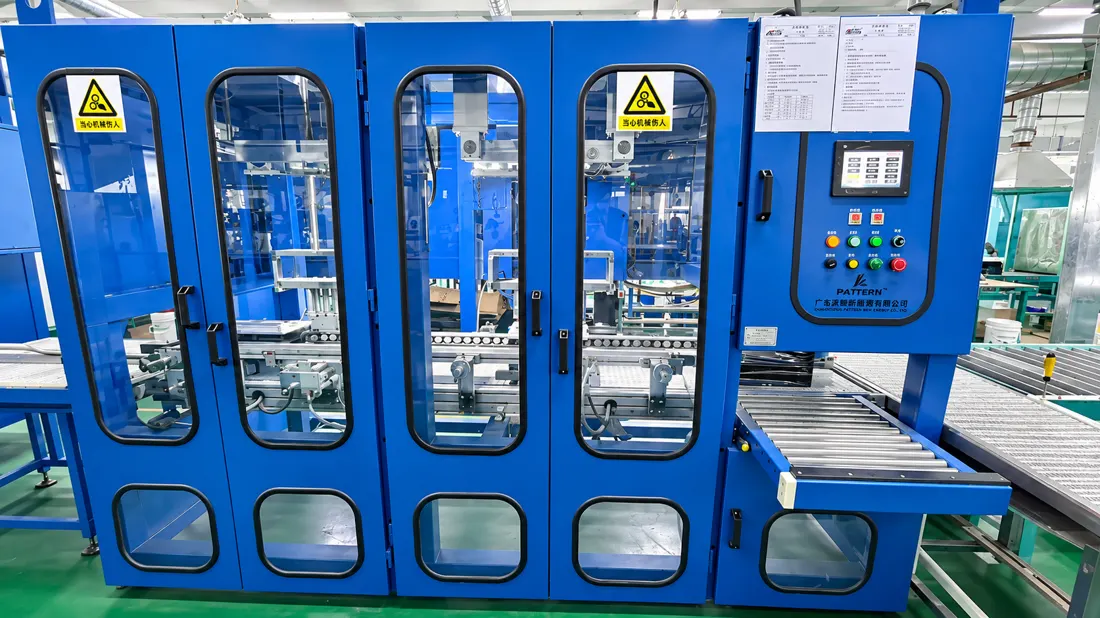
Production equipment supports repeatable handling and assembly operations. Quality review starts with the approved product specification and continues through the relevant process stages, rather than relying only on a finished-product appearance check.
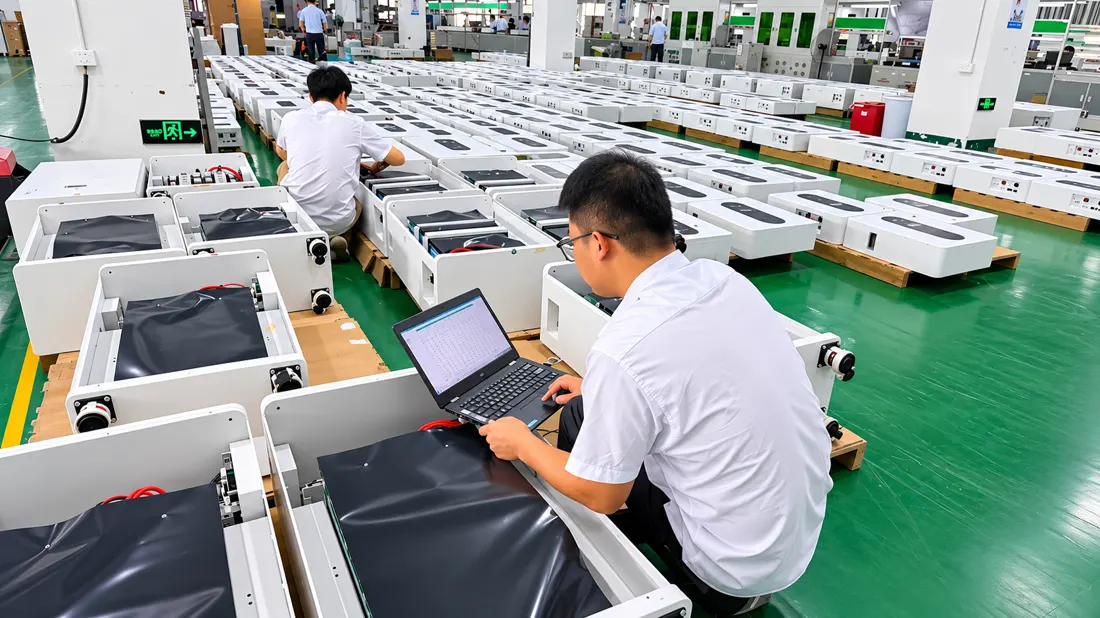
The testing area shows technicians working with battery units and diagnostic equipment. Electrical inspection should follow the selected model’s approved limits, including battery voltage, BMS settings and the functions relevant to the configuration.
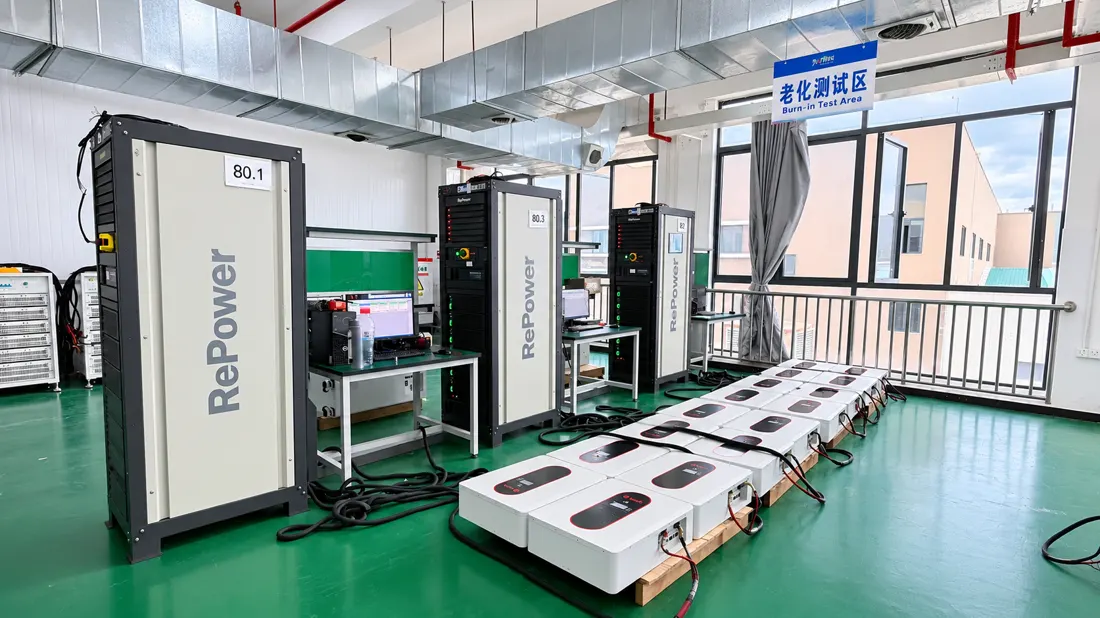
The burn-in area provides a dedicated space for operating checks on assembled battery systems. Test duration, charge and discharge conditions, and acceptance limits depend on the product and agreed inspection plan.
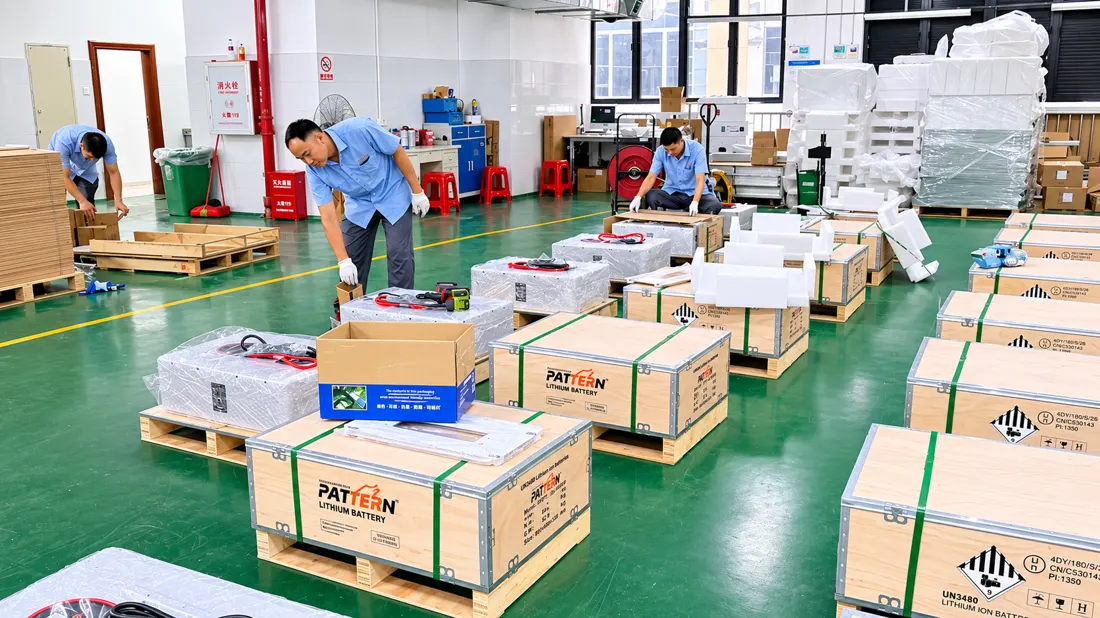
Packing is the final link between the factory and the installation site. Protective materials, crates and handling marks should suit the product’s weight and transport arrangement. The packing list and model documentation complete the order handover.
Practical answers for distributors, installers and project buyers.
The inspection plan should cover the agreed specification, component identification, assembly workmanship, electrical functions and final packing. The selected model determines the test conditions and acceptance limits. Ask our team to confirm the inspection scope for the product in your quotation.
Confirm the battery voltage, charging and discharging limits, communication protocol and inverter firmware. For a package order, request validation with the intended inverter configuration. A matching CAN or RS485 connector alone does not establish complete system compatibility.
The factory has a dedicated burn-in test area shown on this page. Operating checks are reviewed against the selected product and inspection plan. Ask for the applicable test duration, charge/discharge conditions and available records for your order; these are not universal across every model.
Discuss the proposed inspection with our sales team before the order is finalized. Share the inspection agency, checklist, sample size, acceptance criteria and timing. Access, testing arrangements and any associated costs should be agreed in advance.
Tell our team which records you need before production or shipment. Available records and serial-number information should be confirmed for the selected model and order. Keep the approved datasheet, packing list and agreed inspection documents together for receiving checks and after-sales support.
Packing is reviewed around the product weight, handling requirements and agreed shipping arrangement. Protective materials, crates, accessories and marks should match the order. Confirm the transport classification and required shipping documents with the logistics parties for the specific model and route.
Send the model and serial number, inverter model and firmware, system settings, fault codes, operating readings and clear installation photos. Describe the loads and what happened before the fault. These details help the technical team assess the issue and identify the next diagnostic step.