Every quality LiFePO4 battery contains a BMS — a battery management system that silently supervises every charge and discharge. Understanding its core protections helps you evaluate suppliers and troubleshoot installations.
The Five Core Protections
- Over-charge protection: disconnects charging before cell voltage exceeds the safe limit (typically 3.65V/cell)
- Over-discharge protection: cuts output before deep discharge damages cells (typically 2.5V/cell)
- Over-current and short-circuit protection: reacts in milliseconds to faults and overloads
- Temperature protection: blocks charging below 0°C and both charge/discharge above safe limits — critical for lithium chemistry
- Cell balancing: equalizes the voltage of all cells during charge, preventing drift and maximizing pack life
Why Low-Temperature Cutoff Matters
Charging a lithium battery below freezing can permanently plate metallic lithium inside the cells. Any LiFePO4 battery used outdoors or in unheated spaces must have charge low-temperature cutoff — a basic feature that surprisingly many low-cost batteries omit.
Smart BMS and Communication
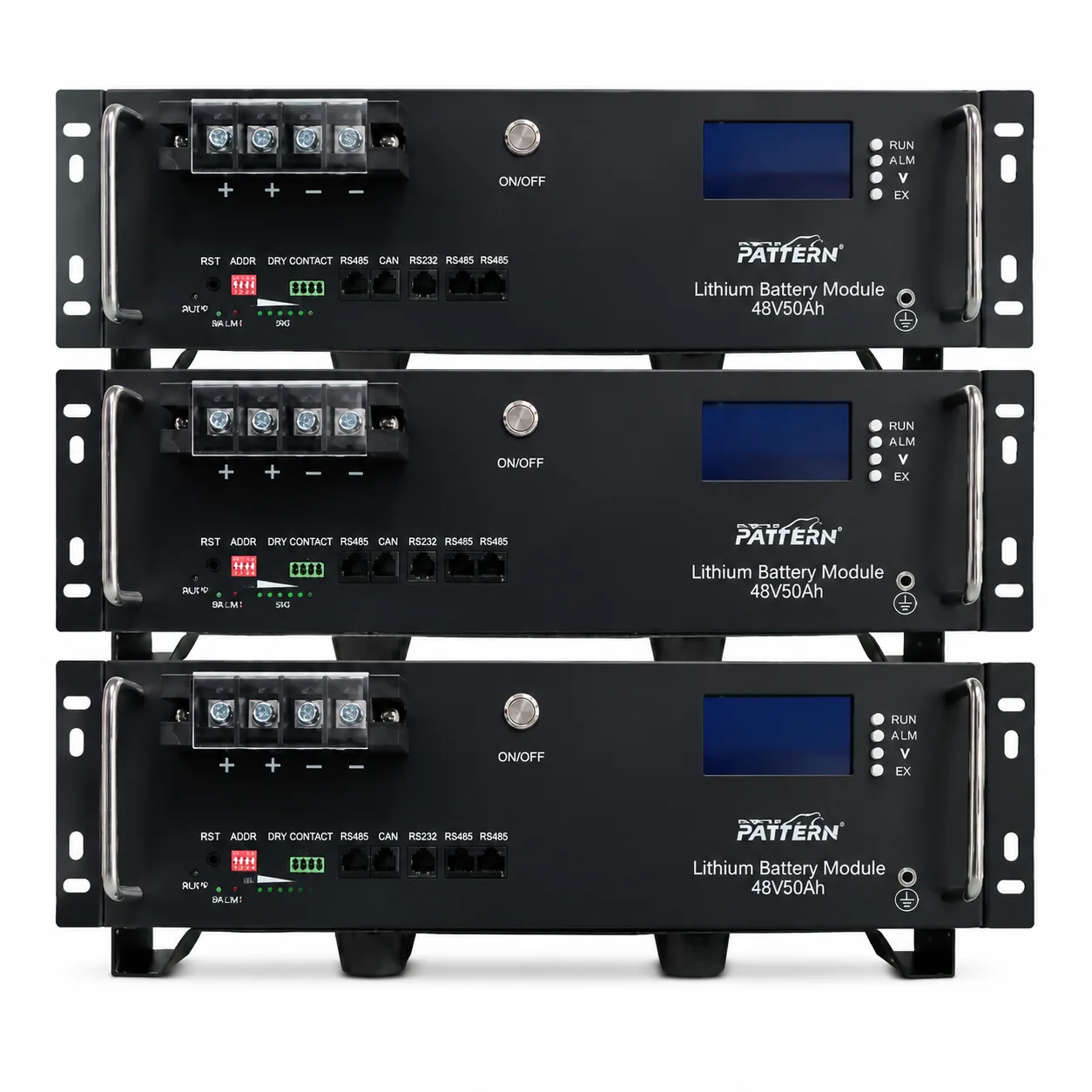
Beyond protection, a smart BMS reports SOC, voltage, current, temperature and alarms to your inverter or monitoring app over CAN/RS485, and coordinates parallel batteries automatically. When evaluating a battery, ask for the BMS protection list in writing — PATTERN publishes it on every datasheet.