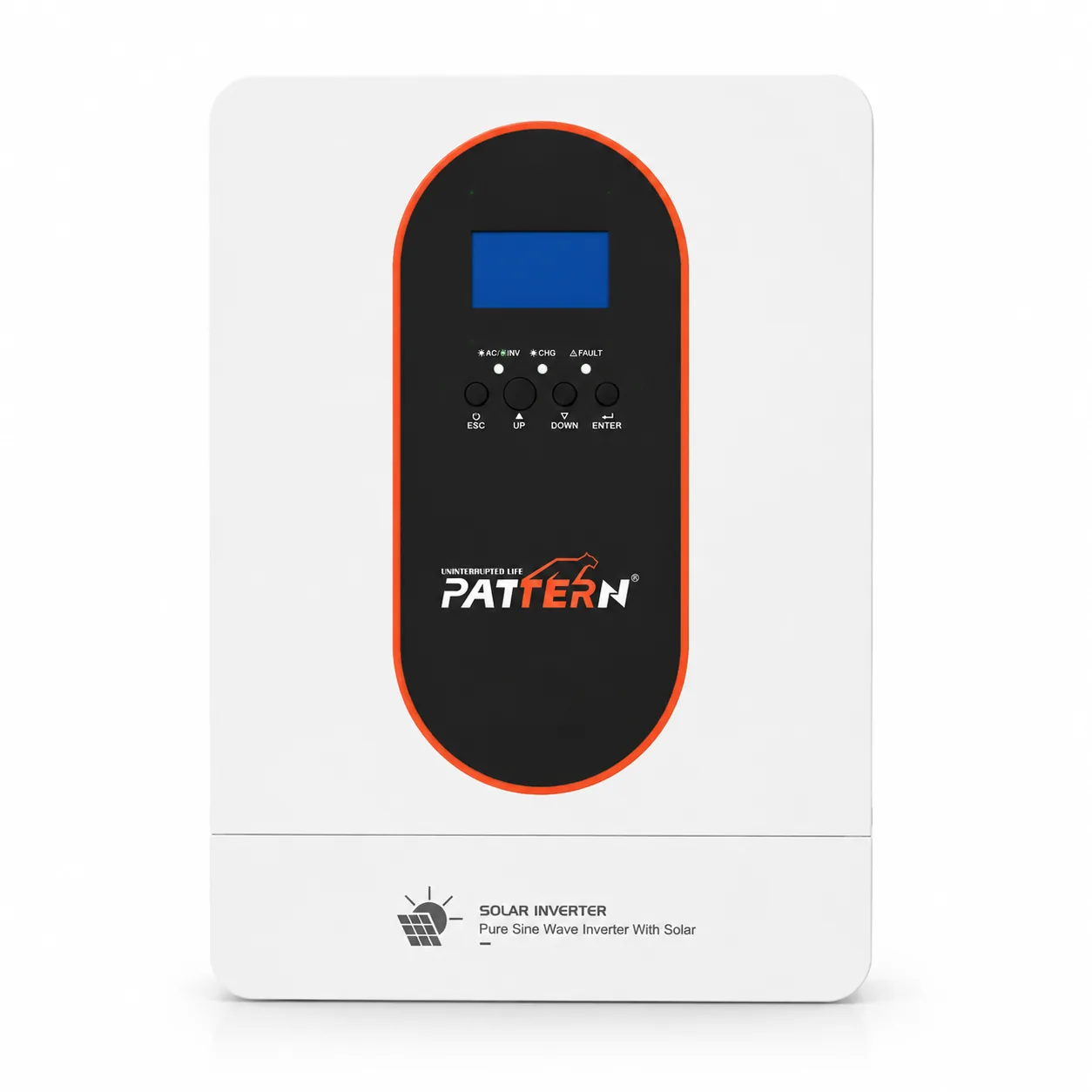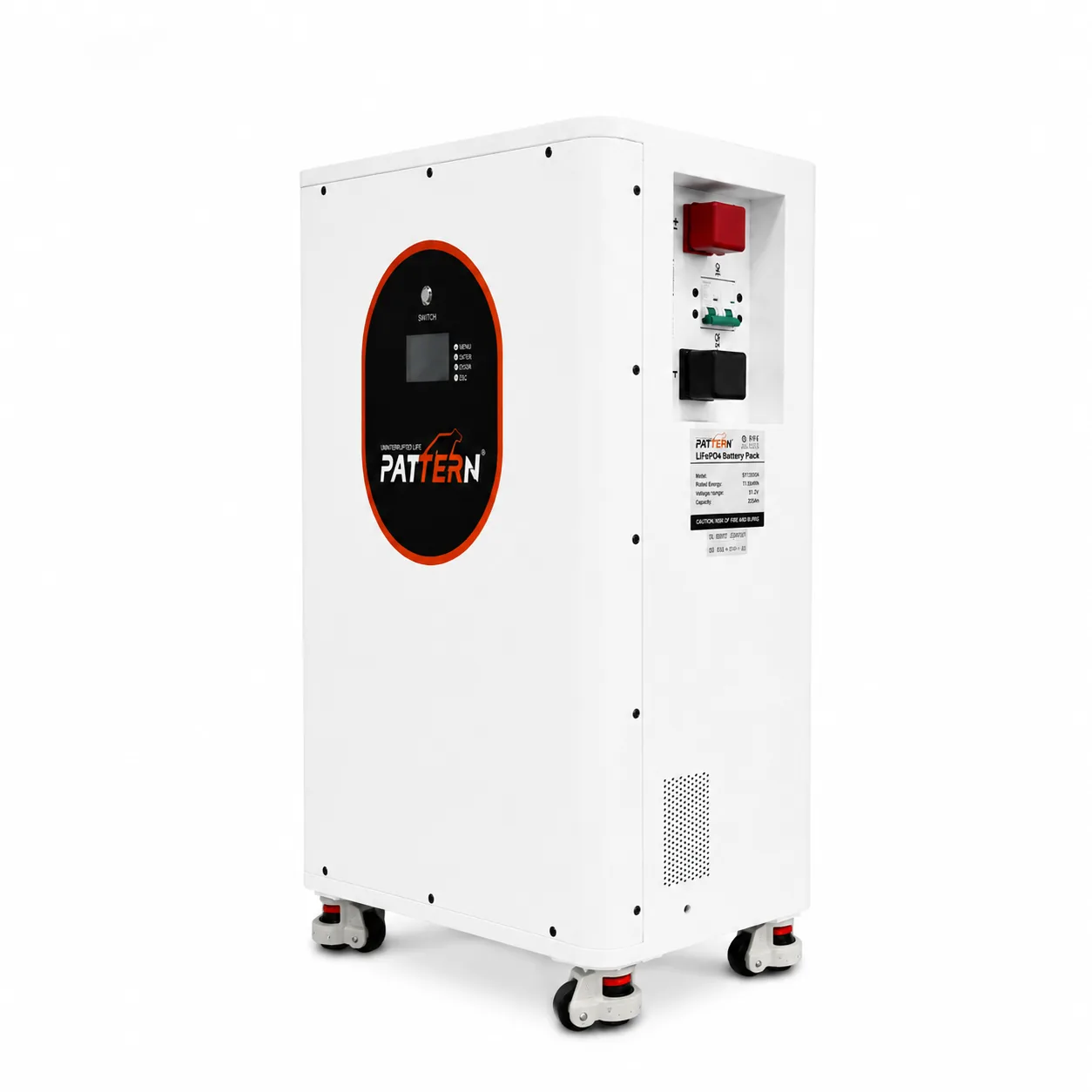
Pairing the wrong battery and inverter is the most common cause of underperforming solar storage systems. Compatibility comes down to three checks: voltage, communication and current.
Step 1 — Match the Voltage Platform
Small 3–3.5kVA inverters typically use a 24V battery platform, while 5kW and larger hybrids use 48V (51.2V LiFePO4). Never connect a 24V battery bank to a 48V inverter or vice versa — check the inverter’s battery voltage specification first.
Step 2 — Confirm the Communication Protocol
For closed-loop operation, the inverter must support your battery’s BMS protocol over CAN or RS485. PATTERN batteries are pre-configured for mainstream brands — tell us the inverter model when ordering and we ship the battery ready to plug in. Pairing a PATTERN battery with a PATTERN hybrid inverter removes this step entirely: they communicate out of the box.
Step 3 — Check the Current Rating
A 10kW inverter on a 48V platform can draw close to 200A at full load. A single 100Ah battery rated at 100A continuous cannot supply that — you would need two units in parallel. As a rule of thumb, provide at least 1.2× the inverter’s maximum battery current across the parallel bank.
- 3.5kVA/24V inverter: one 24V 100Ah+ battery
- 5kW/48V inverter: one 51.2V 100Ah battery (minimum)
- 8–10kW/48V inverter: two or more 51.2V 100Ah units, or one 200Ah unit