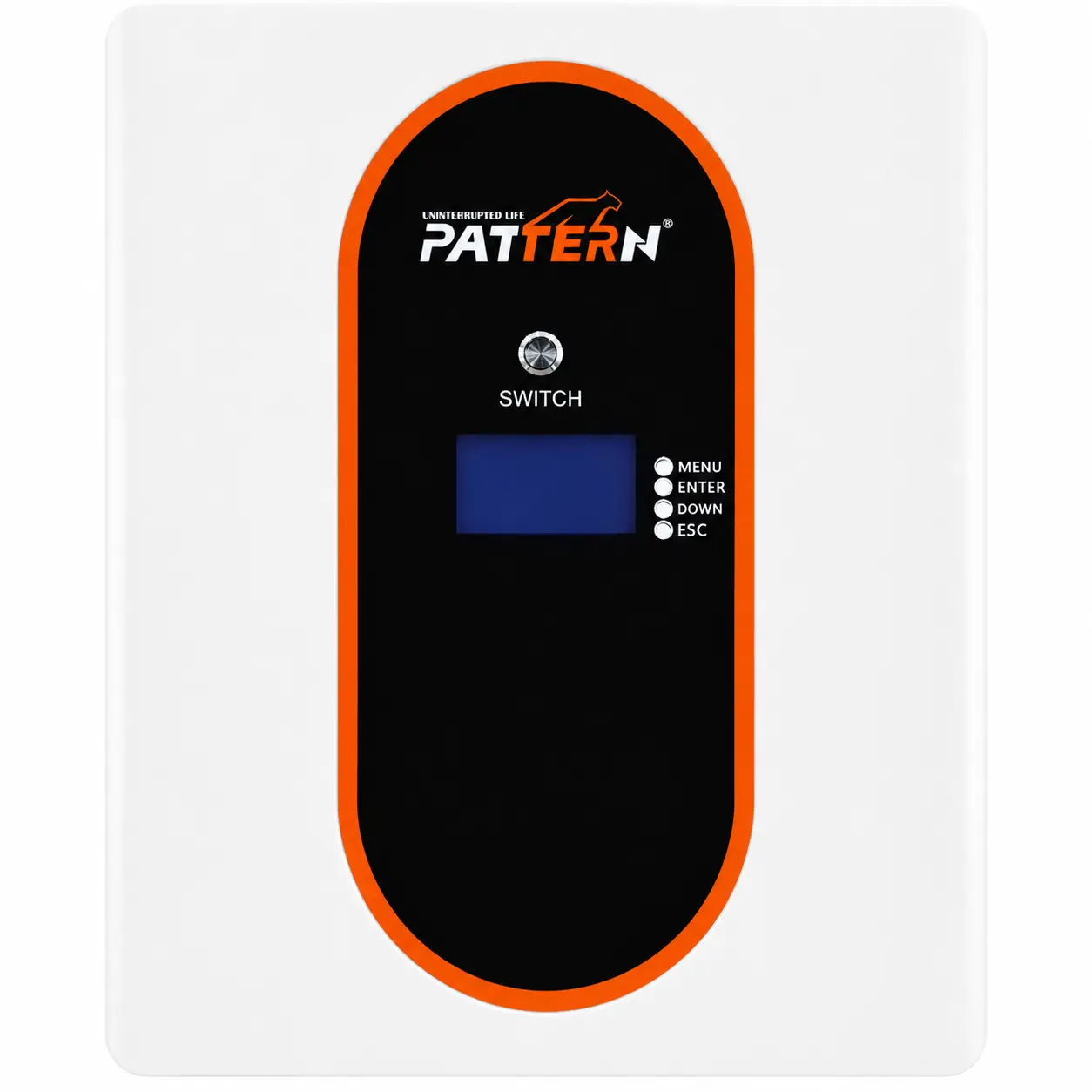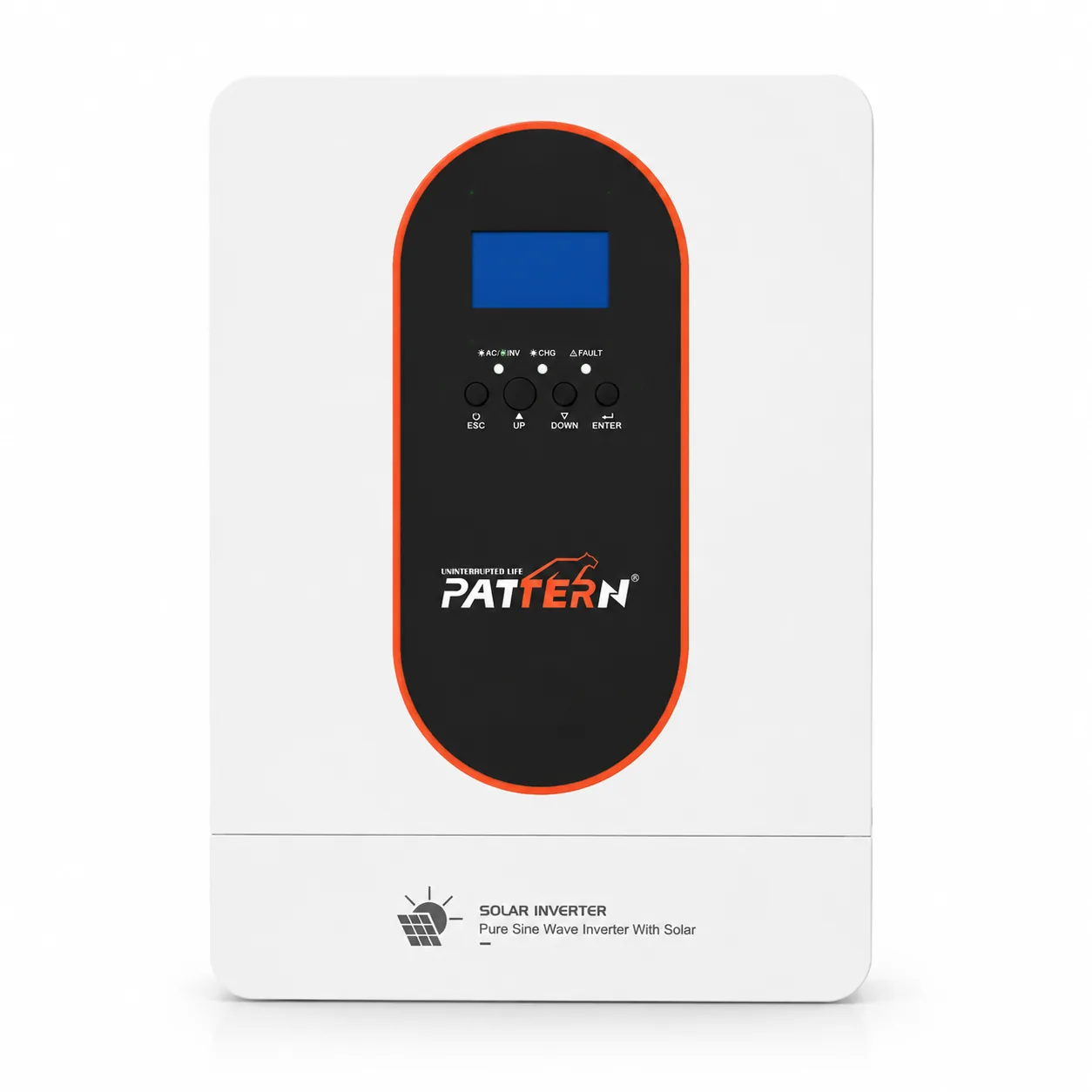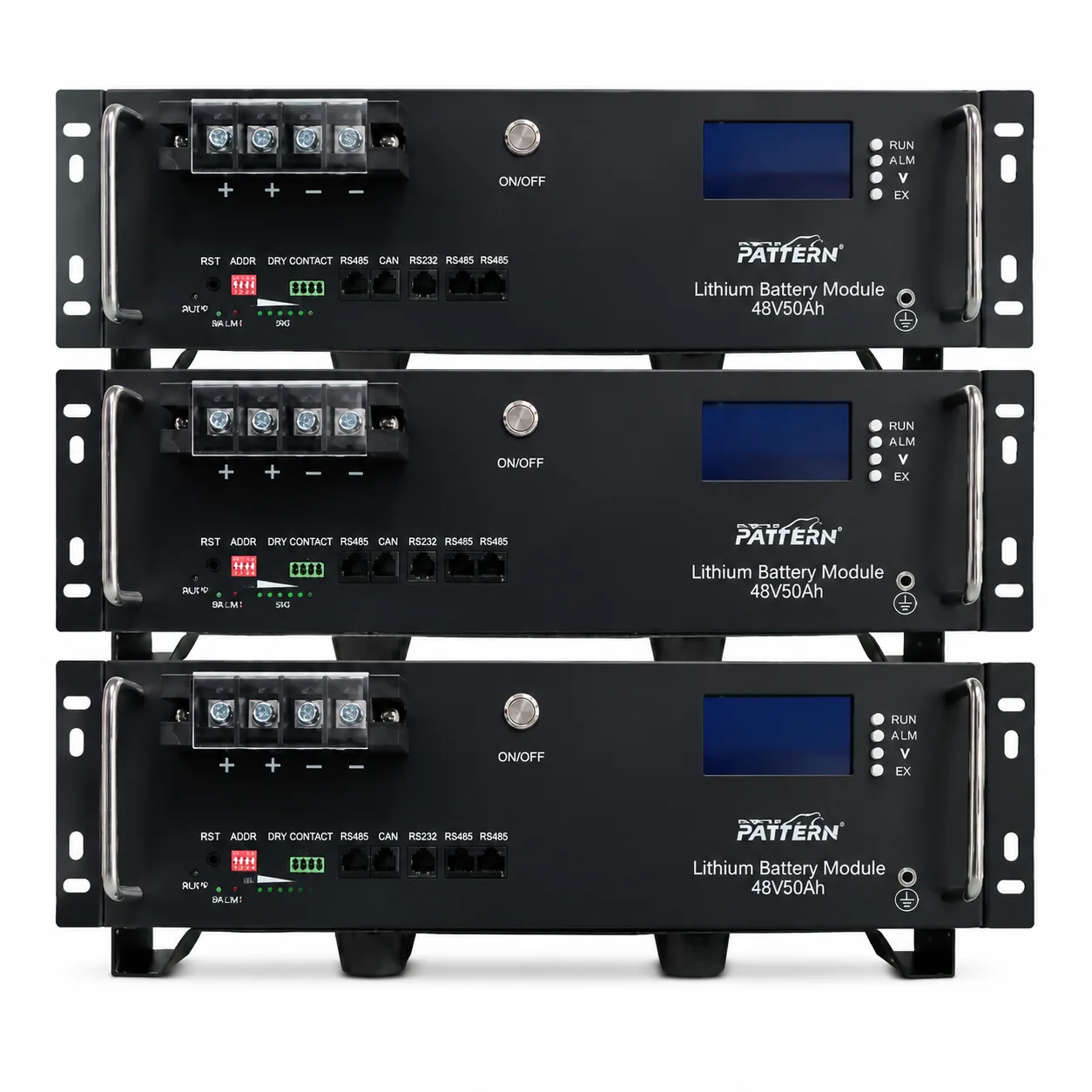
Modern LiFePO4 batteries and hybrid inverters talk to each other over CAN or RS485. This closed-loop link is what separates a smart energy storage system from a battery that is merely connected.
What the Communication Link Actually Does
Over CAN or RS485 the battery’s BMS reports voltage, current, temperature, state of charge and charge/discharge limits to the inverter. The inverter then adjusts its charging profile in real time, displays an accurate SOC, and reacts instantly to alarms — instead of guessing from voltage alone.
CAN vs RS485 in Practice
PATTERN batteries ship with both CAN and RS485 ports, and the protocol is matched to your inverter brand before dispatch. If you change inverter brands later, the BMS can be reconfigured in the field.
- CAN: the newer, noise-immune automotive-grade bus; preferred by most current hybrid inverters (Deye, Growatt, Voltronic, Victron)
- RS485: robust and widely supported, especially on older inverter models and Modbus-based monitoring systems
- RS232: still used for configuration and diagnostics at the factory level
What Happens Without Communication?
A battery without a communication link still works — the inverter falls back to voltage-based (open-loop) control. You lose precise SOC readings and the charge limits become conservative. For warranty clarity and best performance, always connect the communication cable.