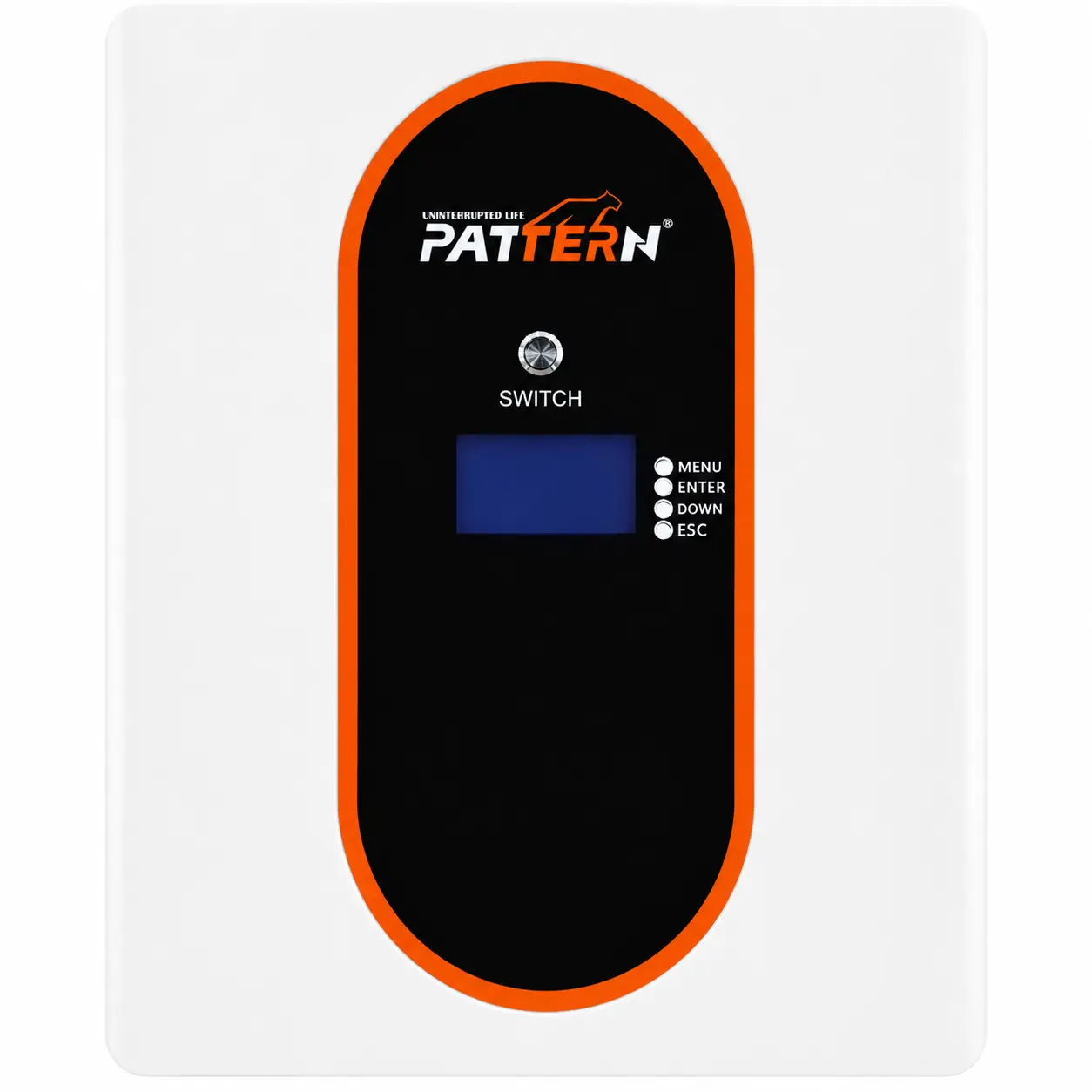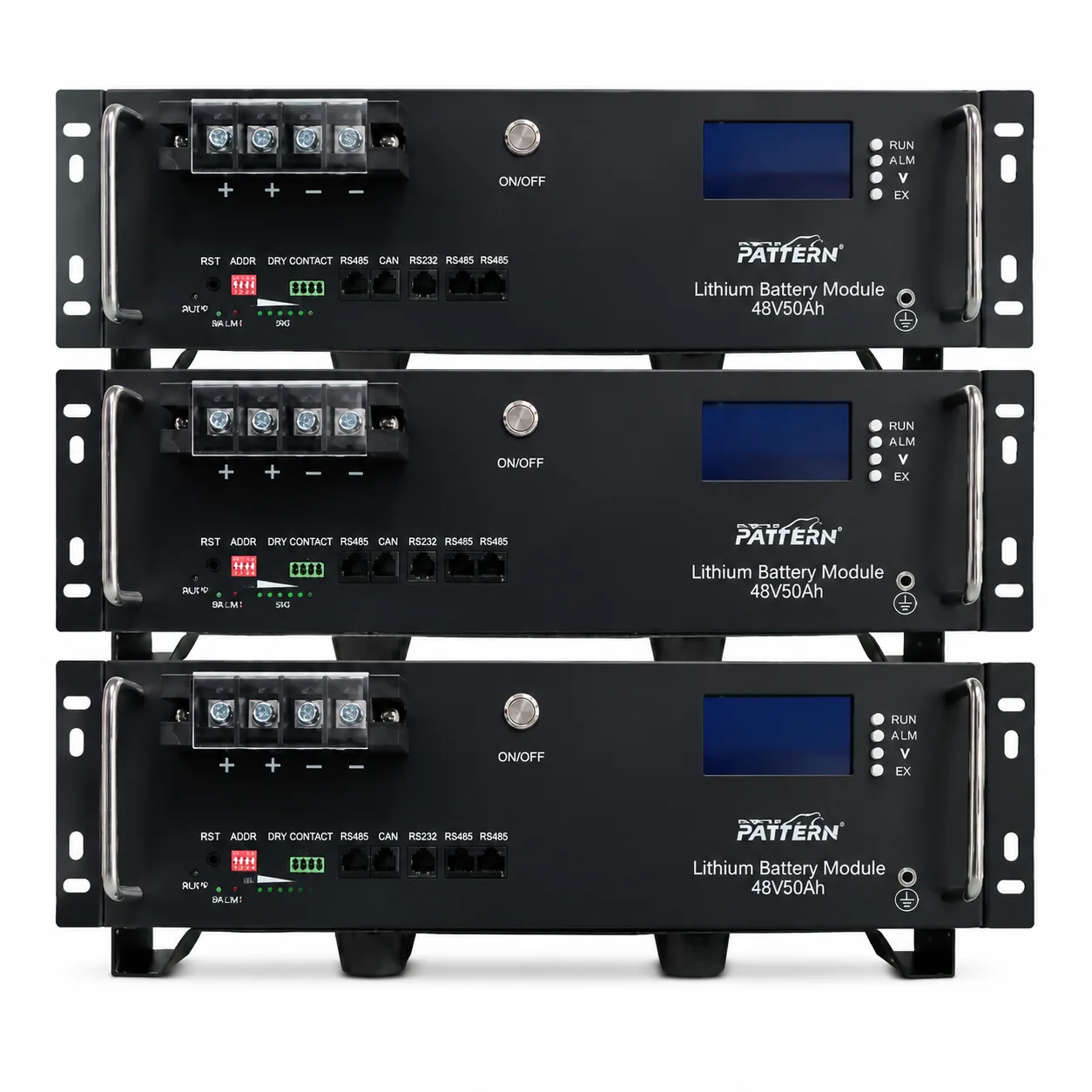
Parallel connection is how small battery modules become large energy storage systems. The safe limit depends on the BMS design: PATTERN wall-mounted units support up to 16 in parallel, and rack-mounted modules up to 32 — scaling a single system past 160kWh.
Why the BMS Sets the Limit
In a parallel bank, one battery acts as master and coordinates the others over the communication daisy-chain. The master balances charge between units, aggregates alarms and reports one combined state of charge to the inverter. Beyond the designed node count, addressing and fault isolation become unreliable — so respect the manufacturer’s stated maximum.
Wiring Rules That Protect Your Investment
- Use identical models, ideally from the same production batch
- Fully charge each unit before first connection
- Keep cable lengths to every unit equal, and size cables for the combined current
- Connect the inverter/charger diagonally across the bank (positive at one end, negative at the other) for even load sharing
- Fit an appropriately rated DC breaker or fuse per unit
Expansion Over Time
Unlike lead-acid banks, LiFePO4 systems with a managing BMS tolerate later expansion well. Adding a new unit to a two-year-old bank is acceptable — the BMS will bring it into balance within a few cycles. This lets distributors stage inventory and lets end users grow capacity as budgets allow.